
Reading a commercial electricity bill can feel confusing when the same account shows numbers in kilowatt demand pricing on one line and megawatt grid-level usage on another. Large facilities, factories, and multi-location businesses often see both units because their commercial energy bill units scale differently depending on how much power is drawn at any given moment versus how much energy is consumed over a billing cycle. Understanding the power vs energy distinction is the first step to making sense of these figures. Once the basic kW to MW conversion logic is clear, every line item on a commercial utility rate schedule becomes far easier to interpret and act on.
Why Commercial Energy Bills Show Both kW and MW
Utility companies track two separate things on a business energy bill breakdown: the rate of electricity being drawn (kilowatts) and the total energy consumed (kilowatt-hours). Smaller accounts rarely cross into megawatt territory, but larger commercial and industrial customers often do, since their utility-scale power generation needs are measured at a different scale. The watt as rate of electricity explains why a quick snapshot of demand looks nothing like the monthly total on the invoice.
Understanding Demand Charges Measured in Kilowatts
A demand charge vs usage charge comparison is where most billing confusion starts. The demand charge measurement reflects the highest level of power drawn during a short window, while usage charges reflect cumulative consumption. This is why peak demand measurement kW figures can spike even when the monthly commercial kWh usage tracking total looks moderate. Businesses that understand their commercial power demand profile can often negotiate better terms or apply demand charge reduction strategies to lower costs.
The Simple Formula Behind Every kW to MW Conversion
The math itself is simple: divide kilowatts by 1,000 to get megawatts, or multiply megawatts by 1,000 to get kilowatts back. This single kW to MW conversion rule applies whether you’re reading a monthly demand charge calculation, comparing commercial solar system sizing estimates, or checking grid interconnection capacity figures from a utility.
| Value in Kilowatts (kW) | Value in Megawatts (MW) | Common Use |
|---|---|---|
| 500 kW | 0.5 MW | Mid-size commercial facility |
| 1,000 kW | 1 MW | Large commercial or small industrial site |
| 5,000 kW | 5 MW | Utility-scale solar or industrial plant |
| 10,000 kW | 10 MW | Regional grid substation capacity |
Comparing Small Business Usage to Utility-Scale Numbers
A residential vs commercial system size comparison shows just how wide the range really is. A typical home might use a few kilowatts, while a large commercial solar array can reach several megawatts of commercial solar array capacity. Knowing where your business sits on that scale helps when reviewing utility rate class commercial options or planning a commercial solar financing upgrade, since pricing structures shift significantly once an account crosses into gigawatt statewide capacity territory on the utility’s broader grid.
This is also where net energy metering and solar renewable energy credits come into play for businesses that generate some of their own power. A site with onsite commercial solar installation capacity can offset part of its demand, and tracking SREC value per megawatt helps quantify the financial return. Utilities calculate business electricity rate comparison figures differently once a facility starts exporting power back to the grid-level electricity production network, so it pays to understand which rate class actually applies before signing a new contract.
Common Billing Confusion Between kW, kWh, and MW
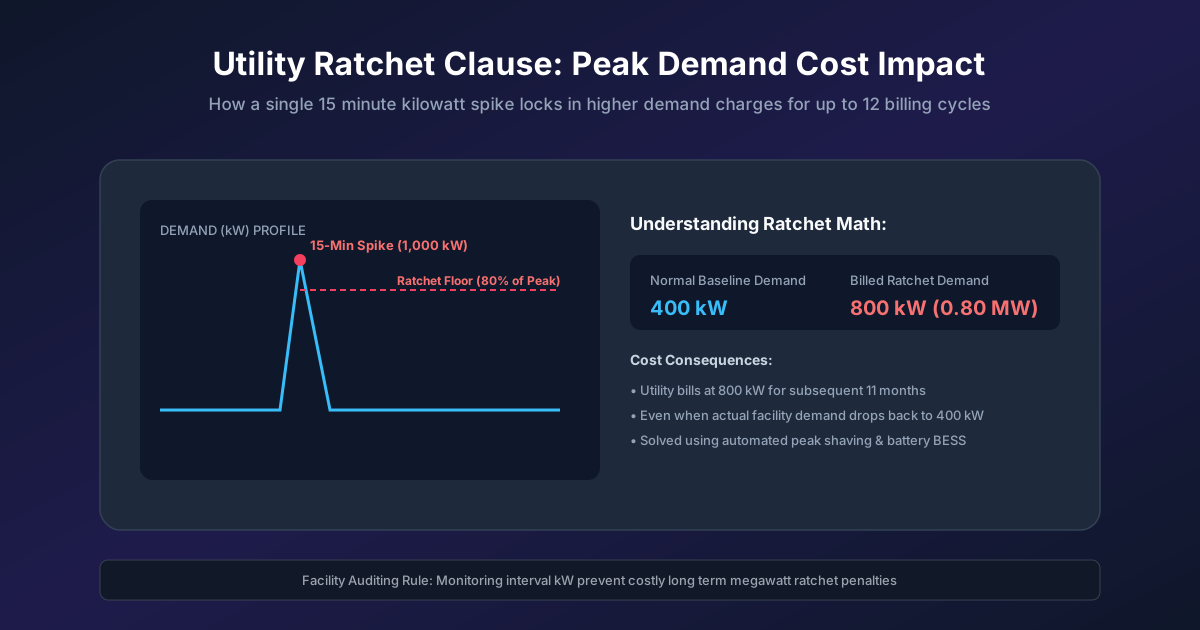
Even experienced facility managers mix up kilowatt hour billing metric figures with simple demand readings. A kilowatt-hour measures energy used over time, while a kilowatt or megawatt measures the rate at that moment. This distinction affects average daily electricity use calculations, time of use electricity pricing schedules, and how a utility demand ratchet clause can lock in higher charges for months after a single demand spike. Reviewing a commercial electricity rate structure line by line, rather than skimming the total due, usually reveals where these charges originate.
How Businesses Use These Numbers to Cut Costs
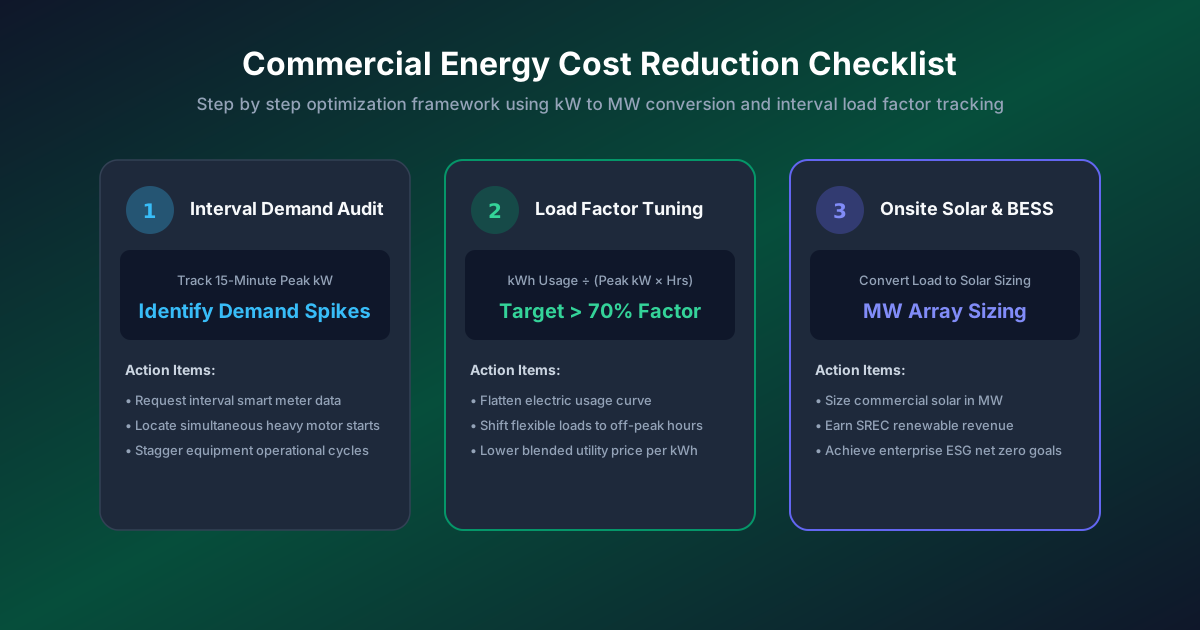
Once the conversion is second nature, a commercial energy cost reduction plan becomes much more achievable. Reviewing load factor calculation data alongside a facility energy management audit helps identify where demand spikes are driving costs up. Many businesses also use these figures to evaluate a commercial solar payback period, apply for commercial solar tax incentives, or pursue business sustainability reporting goals tied to lower business carbon footprint reduction targets. A clear commercial energy audit checklist keeps the process organized from start to finish.
Conclusion
Converting between kilowatts and megawatts is simple once the formula is clear: divide or multiply by 1,000. Commercial bills combine demand readings with usage totals, so understanding both figures matters equally. Reviewing your facility electrical load analysis, tracking demand charges, and comparing usage against industry benchmarks all help control costs. With this knowledge, reading any commercial energy bill quickly becomes straightforward, letting businesses plan upgrades and reduce spending with confidence.
Need to convert electrical units right now?
Use our precision kW to MW, MW to GW, and kWh to MWh instant engineering calculators.